


BDSM Isn't What Porn Makes It Look Like
Most people's first exposure to BDSM comes from porn, which represents real kink about as accurately as action movies represent real combat. The reality is more interesting — and more accessible — than the Hollywood version suggests.
BDSM is an umbrella term covering Bondage and Discipline, Dominance and Submission, and Sadism and Masochism. It is not one thing. It is a broad spectrum of practices built around the intentional exchange of power, sensation, and control between consenting adults. Some people go deep — full scenes, dungeon gear, established D/s dynamics. Others just want to try tying someone up. Both are completely valid.
What makes BDSM work — what separates it from abuse — is consent, communication, and care. That is the foundation everything else is built on.
The Framework: SSC and RACK
SSC — Safe, Sane, Consensual. The classic standard. Every activity should be physically safe, undertaken with clear minds, and fully agreed upon by everyone involved.
RACK — Risk-Aware Consensual Kink. A more nuanced update that acknowledges some BDSM activities carry inherent risk — and that is okay, as long as everyone understands and accepts those risks going in.
Neither is a checklist. They are a mindset. Before anything happens, everyone involved knows what is happening, wants it to happen, and has agreed to it freely.
Safewords: Non-Negotiable
A safeword immediately stops all activity — no questions, no negotiation. The most common system: Green (keep going), Yellow (slow down, check in), Red (stop completely). For scenes where verbal communication is not possible, establish a physical signal in advance — dropping a held object, three taps, a specific gesture.
Safewords are not a sign of weakness. Using one is exactly what they are there for. A good dominant will be relieved their partner spoke up. If someone dismisses safewords, that is your signal to walk away.
The BDSM Spectrum: Where Do You Start?
Bondage
Restraining a partner with rope, cuffs, or other gear. One of the most popular entry points because the gear is accessible, the learning curve is manageable, and the psychological element — the helplessness, the trust — is immediately compelling. Start with Fetish Fantasy Silky Rope or KinkLab Leather Hog Tie Straps. Ouch! Leather Ankle Cuffs are great for cuff-based restraint.
Dominance and Submission
The power exchange element — one person leads, the other follows. This can be purely psychological or combined with bondage and sensation play. D/s dynamics range from a single scene to an ongoing relationship structure. For beginners, just exploring who naturally gravitates toward which role is a solid starting point.
Collaring
A collar given by a dominant to a submissive carries significant symbolic weight in BDSM culture. You do not need to start here, but if D/s interests you, knowing what collars represent helps. The KinkLab Bondage Basics Leather Collar is a clean, understated option for people just getting into it. Browse the full Collars and Leashes collection.
Impact Play
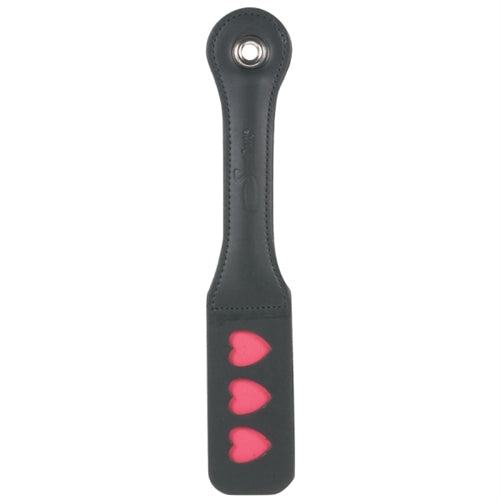
Spanking, paddling, flogging — the intentional use of pain as pleasure. Start with hands, graduate to a paddle, then a flogger as you develop technique. Good starting gear: Rouge Riding Crop for targeted, controlled impact. Saffron Flogger for a softer, thuddy sensation. Prowler RED Heavy Duty Flogger when you are ready to step it up. Full range in our Impact Play collection.
Sensation Play
Using different sensations — temperature, texture, light pain — to heighten arousal and awareness. Blindfolds are the classic entry point: removing one sense amplifies every other. Combine with restraints and you have a scene that is psychologically intense without requiring advanced gear.
Nipple Play
Often overlooked. Nipples are highly sensitive and respond well to suction, pinching, and clamps. Great as an add-on to restraint scenes. The OxBalls Gripper Nipple Suckers and Classic Adjustable Clamps are both accessible starting points.
Before the Scene: Negotiation
Negotiation is the conversation that happens before a BDSM scene. It establishes hard limits (off the table entirely), soft limits (willing to explore cautiously), interests (what you actually want), health information, safewords, and aftercare preferences. This conversation does not have to be clinical — it can be part of the buildup. But it has to happen. Skipping negotiation is how people get hurt or have experiences they did not actually want.
Aftercare: Do Not Skip This
Aftercare is what happens after a scene — coming down, reconnecting, taking care of each other. Intense BDSM scenes produce significant adrenaline, endorphins, and emotional vulnerability. When the scene ends, both partners can experience a crash — sub drop or dom drop — involving sadness, anxiety, or emotional fragility. Aftercare is the buffer.
What aftercare looks like varies: physical closeness, blankets, water, food, quiet conversation, lying together. Ask your partner what they need before the scene, not after. The dominant partner needs aftercare too.
The Gear That Actually Matters for Beginners
You do not need a dungeon to start. The most useful beginner kit is minimal:
Restraints: Silky rope or adjustable cuffs. Always keep safety scissors nearby when using rope.
A blindfold: One of the highest-impact, lowest-effort tools in BDSM. Browse our Blindfolds, Hoods and Masks collection for options from basic to advanced.
Impact tool: Start with a riding crop — precise, controlled, easy to modulate. Learn where and how to strike safely before adding more tools.
A collar (if exploring D/s): Even a simple leather collar can be a powerful psychological anchor in a scene.
Lube: Keep a good bottle nearby for any scene involving anal play.
Common Beginner Mistakes
Skipping negotiation. Already covered this, but it bears repeating. The sexiest thing in BDSM is a partner who communicates clearly.
Going too intense too fast. Start lighter than you think you need to. You can always do more next time.
Ignoring aftercare. The scene ending does not mean the responsibility ends.
Not establishing a safeword. Every single scene. No exceptions.
Tying too tight. Check in frequently. Numbness or tingling means the restraint needs to be loosened. Never tie around the neck.
Shaming yourself for your interests. What you are into is what you are into. BDSM is practiced by millions of people across every demographic. The only things that matter are safety and consent.
Where to Go from Here
BDSM has a community — and that community has accumulated serious knowledge about technique, safety, and gear. Local kink events, munches (casual social gatherings for kinksters), and online resources are all worth exploring as you develop your interests.
For gear, you are already in the right place. TIM has been serving the gay kink community for decades. We know this space from the inside. Browse the full BDSM Gear collection — or start with focused entry points: Restraints, Impact Play, and Collars and Leashes.
Start slow. Communicate relentlessly. Take care of each other. Everything else is just practice.